The Child Care Health Newsletter Banner
Snohomish County Health Department Logo

September 2025  

Click here to visit our website  

Back to School

Starting Strong: Helpful Tips for Easing School Transitions

Starting school can bring a mix of excitement and nerves for both kids and their parents. Whether your little one is about to step into preschool for the first time or is moving up from preschool to kindergarten, there are plenty of ways to help make this change easier and more positive.

Here are some resources you can share with families:

  • For guidance on helping toddlers adjust to preschool, check out: Transition Tips Toddler to Preschool
  • For advice on supporting preschoolers as they begin Kindergarten, visit: Transition Tips Preschool to Kindergarten

Keep in mind that separation and settling into new routines take time. Both you and your child will benefit from patience and ongoing support as you navigate this new chapter together.

Explore these additional resources for more helpful ideas and strategies:

  • 11 Ways to Help Children Say Goodbye | NAEYC
  • Readiness: Not a State of Knowledge, but a State of Mind | NAEYC
  • Personal Stories to Help Children Get Ready for School | NAEYC
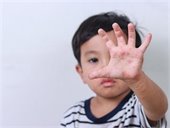
Child with rash on hand

Hand, FOOT, AND MOUTH DISEASE: HOW TO LIMIT THE SPREAD

Our team has been notified from many child cares of recent hand, foot, and mouth disease cases occurring among their children. As it is most frequently seen in the summer and fall, here is some information on how to help limit the spread in your program.

Hand, Foot, and Mouth Disease (HFMD) is spread many ways:

Through Respiratory Droplets

You can help limit the spread via respiratory droplets by:

  • Teaching children and teachers to cover mouths and noses while coughing or sneezing – preferably with a facial tissue. If not available in time, teach all to use upper arm sleeve or elbow. Remove mucus on skin or other surfaces and perform hand hygiene right away. Consider changing clothing if there is significant mucus on it.
  • Using good hand hygiene after coughing or sneezing.
  • Cleaning surfaces that are coughed or sneezed on right away.
  • Excluding children that have mouth sores with drooling.
  • Sanitizing toys – especially those that are put in the mouth (if your staff see a child put a toy in their mouth, they should remove it from the play area until it has been cleaned and sanitized).

Through Direct Contact

You can help limit the spread from direct contact by:

  • Covering open sores with water-proof dressing (exclude if not possible).

Through the Fecal-Oral Route

The virus that causes HFMD can continue to be shed via stool for weeks after first becoming sick. You can help limit the spread by

  • Performing good handwashing after toileting and diaper changes. We strongly encourage handwashing for children include washing with soap and water after toileting or diapering.
  • Practicing good cleaning and sanitizing practices, especially in diapering areas.
    • Be sure to follow all timing requirements for cleaning/sanitizing as laid out in the guidelines

For more information on HFMD, please visit our hand, foot, and mouth disease fact sheet.

For more information on exclusion criteria, please visit our Keep Me Home If poster.

If you have a case of HFMD at your child care and you are in Snohomish County, please give us a call at 425-252-5415 or email childcarehealth@co.snohomish.wa.us for additional resources and support.


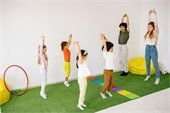
Children and teachers stretching

BUSY BODIES MAKE BRAIN WAVES

Did you know that wiggling on the floor helps prepare a 4-5 month old baby to crawl and forms brain pathways that develop future large motor skills; that skipping rope and balancing on a log support a preschooler’s self-esteem; that tossing scarves in the air and skipping in a maze contribute to reading and math skills for the school-age child? 

Physical activity during childhood has far-reaching health and developmental benefits that show up later in life and last a lifetime. By offering an assortment of movements throughout the day, children of all ages can get and stay physically fit, improve motor skills, and develop and fine tune numerous brain pathways important for optimal physical growth and cognitive learning. 

Include movement often during the day to enhance your child care program. Ask a group of toddlers to slowly move like an owl or shake like a puppy dog to help ease commotion during transition times. Ask a group of preschoolers to pop like popcorn to wake up sleeping muscles after sitting during circle time. Engaging often in safe, developmentally appropriate activities that are large and small, loud and quiet, inside and outside help children grow well physically and mentally. 

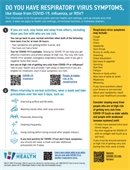
photo of DOH respiratory virus symptom one-pager

COVID-19 Reporting and exclusion Guidelines

Gearing up for respiratory virus season or wondering what to do if a child tests positive for COVID-19?

REPORTING

Reporting is still required. Child care facilities in Snohomish County must report:

  1.  All cases of COVID diagnosed by a medical provider or laboratory.
  2.  Outbreaks (5 or more cases or 20% of a group).

Please utilize Snohomish County Health Department's reporting form when reporting on the above scenarios.

Individual cases identified through at-home testing are not required to be reported, but child care facilities are strongly encouraged to contact the Child Care Health Outreach team for guidance, resources, and current best practices (email: childcarehealth@co.snohomish.wa.us or 425-252-5415).

EXCLUSION GUIDELINES

We are currently following the Washington DOH Guidelines for what to do when you are sick with COVID-19. For additional information on these guidelines please contact the Child Care Health Outreach Program. 

If a child or staff member tests positive for COVID-19 or another respiratory virus OR has respiratory virus symptoms that are not better explained by another cause, follow CDC Guidance for staying home and away from others; this includes people you live with who are not sick.

A child/staff member can return to child care when BOTH of the following have been true for at least 24 hours:

  • Symptoms are getting better overall 
  • Fever-free (and not using fever-reducing medication)

Please note: People with COVID-19 are often contagious for 5-10 days after their illness begins. When returning to child care and normal activities, wear a mask if possible and take added precautions for the first 5 days upon return. 

Child cares are required to follow the information written in their health policy, where you may choose to have policies stricter than the state guidelines (examples include requiring exclusion from child care for 5-7 days, wearing a mask upon return for the next 5 days, requiring a negative COVID test before returning). Please review your health policy to ensure you are following your current standards. If after reviewing, you would like the Health Department to review and sign your health policy, please utilize our center, family home, or school-age template and email it to us at childcarehealth@co.snohomish.wa.us  for further information.

Child Care Health & Safety Classes Logo
instructions for learning portal
LMS
learning portal

We appreciate your patience as we continue to update our courses to enhance your learning experience. Classes are being offered AT NO COST at this time. 

For questions about our online classes, contact our team at ChildCareHealth@co.snohomish.wa.us or via phone at 425.252.5415.

This Month's Featured Classes

Child chipping paint off a window frame

Childhood Lead Poisoning Prevention


Lead remains a problem in Washington State and Snohomish County. This course is designed to educate child care providers and staff on how to keep children and families safe from the harmful effects of lead. Did you know there is no safe level of lead? In this course you will learn where lead was historically used, where it is currently still found, and simple steps you can take to protect children and families from the effects of lead poisoning.

Register Here

Drawing of a house with a septic system in the yard

Septic Care Class for Home Child Cares in Snohomish County

This course is specifically designed for Snohomish County child cares with a septic system. Please make sure this course is appropriate for your situation before registering.

Child cares with septic systems are responsible for protecting the health and safety of children in their care from potential risks. Learning how to best care for your system will help create a safe child care environment. This self-paced course will cover topics including how your system works, how to find your septic system records, best practices for care and maintenance, signs of a failing septic system, how to find septic contractors and what to expect, and financial assistance options for septic systems.

Register Here

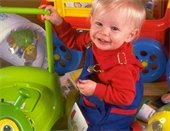
Child with lots of toys

Injury Prevention: Toy Safety

In addition to providing children with fun and enjoyment, toys help them develop skills, test their abilities, engage their imagination, and learn. Unfortunately, many children are injured every day from toys that are supposed to be fun. This course will focus on preventing injuries from toys in child care settings.

Register Here

Contact Information

Snohomish County Health Department
3020 Rucker Ave., Ste. 202, Everett, WA  98201

                                                                                     
Email: ChildCareHealth@co.snohomish.wa.us

Program Phone:  425.252.5415

Website:  http://www.snohd.org/childcare

Received this as a forward? Sign up for our newsletter by clicking  here.

The Child Care Health Outreach Program staff are available to consult with you on these and other health, safety, and nutrition topics by phone, by email, or at your child care facility. 

Share on Facebook
Share on Twitter
Share via Email

Snohomish County Health Department
3020 Rucker Ave., Everett, Washington

Powered by
CivicSend - A product of CivicPlus