The Child Care Health Newsletter Banner
Snohomish County Health Department Logo

May 2024  

Click here to visit our website  

Sushi tempura and Chopsticks

Nutrition in CHILD CARE

Early mealtime experiences influence children’s food acceptance. They also influence a child's ability to self-regulate their own food intake based on internal cues for hunger and fullness. The childhood mealtime environment shapes eating habits that continue into adolescence and adulthood.  

Child care providers know that some children can be picky about what they eat. For this reason, it is important to serve a wide variety of foods for meals and at snack time. Some children are naturally more sensitive to taste, smell, or textures. Did you know some children need to try a new food 10 times of more before they decide they like it? Wait at least a week between trying a new food again.

Family style meal service: Many child cares are back to family-style meal service. When children pass and request foods during mealtimes, they learn social skills and build fine motor skills. For young children, mealtimes offer opportunities to develop confidence, practice language, and even acquire math concepts.

Children’s health depends on adults providing a variety of healthy foods throughout the day. Practicing safe food handling, fostering self-regulation, and role-modeling during mealtimes are also important mealtime considerations. 

Here are some other things to try as you develop your menu.

  • To help children stay full longer into the evening, try offering protein foods for afternoon snack. Examples include low-fat cheeses, hummus, sunbutter or alternatives such as WOW butter, low-fat yogurt, or milk.
  • Pair these foods with foods high in fiber: Whole-grain crackers or bread, couscous, unsalted popcorn, fresh whole fruits such as apples or pears, oravocados.
  • Try offering vegetables at breakfast or for morning snack and include more fresh fruits in the afternoon. Here are tools and ideas for offering more fruits and veggies in your child care: 
    • Add fresh veggies to omelets, scrambles or breakfast wraps. 
    • Serve a variety of salads. The more color the better.
    • Try cucumber wheels during morning snack.
  • For more ideas on how to incorporate vegetables into your menu: Vary Your Veggies | MyPlate
  • Try to incorporate multicultural foods into your menu. Here are some examples:
    • Chicken and veggie couscous 
    • Baked egg rolls
    • Curry vegetables
    • Veggie Stir fry
    • Tabbouleh 
    • More multicultural food recipes and ideas are available from the USDA Food and Nutrition Service or ask families to provide their own recipes from home.

Do you have questions or would you like assistance with menu planning? Please reach to our team at shd.childcarehealth@co.snohomish.wa.gov or by phone at 425.252.5415


Early Care and Education Updates from CDC

Did you know that the Centers for Disease Control and Prevention has a webpage dedicated to health and safety for child care and early learning environments? We encourage you to take a look at all the great information and resources they have available for you. https://www.cdc.gov/earlycare

This month they are featuring a page with tips for outdoor play and how to keep children safe while they reap the benefits of fresh air and exercise. 

Picture of sun and thermometer

Protect kids in the sun

The weather is getting nicer and it's time to spend more time outside. As you plan your day, it is important to keep in mind the time of day you will go out and make sure you allow enough time to apply sunscreen if children will be exposed to the sun's rays. Here are some important things to remember:

  • Limit direct sun exposure between 10:00 am and 4:00 pm, when UV rays are strongest. Spend time outside earlier in the day or find a shady space to play. If you don't have a naturally shady spot, you can make one with a tent, canopy, or sheet.
  • There are different types of ultraviolet (UV) rays that make sun protection essential when spending time outdoors. Broad-spectrum sunscreens protect against both UV A and UV B rays that can lead to long-term problems such as skin or other types of cancer.
  • Apply the right type of sunscreen - use a broad-spectrum sunscreen that is at least 15 SPF. Fragrance-free sunscreens with zinc oxide and titanium dioxide are usually safe and effective. Sunscreens that have oxybenzone should not be used.
  • Put the sunscreen on children at least 15 minutes before going outside, so it can be absorbed.
  • Sunscreen should never be used on infants under 6 months old, though spending time outside is still important. For these infants, stay in the shade and use protective clothing such as hats or umbrellas.
  • Do not use aerosol sunscreen so that you and the children do not breathe it in. 
  • Remember to check the sunscreen’s expiration date. Sunscreen without an expiration date works for no more than 3 years. If families bring their own sunscreen, it is recommended that their sunscreen has an expiration date. 
  • Make sure families have filled out an updated sunscreen application form.
  • If a child rubs sunscreen into their eyes, wipe the eyes and hands clean with a damp cloth.
  • Have children wear youth-size and shatter-resistant sunglasses with at least 99% UV protection and/or a wide-brimmed hat. 

For more information on sun safety visit the American Academy of Pediatrics (AAP) sun safety page or the Caring for Our Children guidelines. 

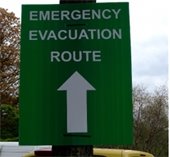
Emergency Evacuation Routes

Emergency/ Disaster Plan Template

In 2013 the Child Care Health Outreach Program (CCHOP) team created a Disaster/ Emergency plan template and at this time our template is no longer reflective of the most recent WAC changes. The CCHOP team intends to update this template as time allows.

WAC 110-300-0470: Emergency Preparedness Plan

At this time please be advised of the following requirements that must be included in your plan:

  • Evacuation floor plans must be printed and attached to the Emergency Preparedness Plan.
  • The method by which parents/ guardian will be notified in the event of an emergency.
  • A plan for what you would do if you had an emergency and children may be left unsupervised.
  • Items required to be taken upon evacuation need to be listed in the Disaster Plan.
  • Emergency preparedness plans must be reviewed annually (and when updated) by the director and with all program staff. Staff must sign that they have reviewed the plan each year.

Please review WAC 110-300-0470 and make sure your plan meets these requirements.

COVID germ

COVID-19 INFORMATION AND RESOURCES

Remember to report any outbreaks and medically diagnosed cases of COVID-19 that occur at your child care or early learning facility via our website.

The Washington State Department of Health has updated the guidance for K-12 Schools, child care and early learning facilities regarding respiratory illness, including COVID-19. For more information please see the Health Alert sent out 4/2/2024.

If you are not signed up to receive health alerts from our team, you can do so on our website.

More information on updated COVID-19 guidance can be found in Snohomish County Health Department's Blog: Public Health Essentials

If you have questions about these guidance changes, or would like assistance in updating or implementing your health policy, please reach out to our team at 425.252.5415 or by email at shd.childcarehealth@co.snohomish.wa.us

Image of COVID test

Free test kits for child cares - LIMITED SUPPLY REMAINING - Child cares can request COVID-19 tests to share with families at no charge through the Snohomish County Health Department. To request your kits and discuss the pick-up process, you must send an email to shd.childcarehealth@co.snohomish.wa.us.
  
Tests are NOT available on a drop-in basis. Test kits can be picked up at our downtown Everett office or delivered to the child care facility.

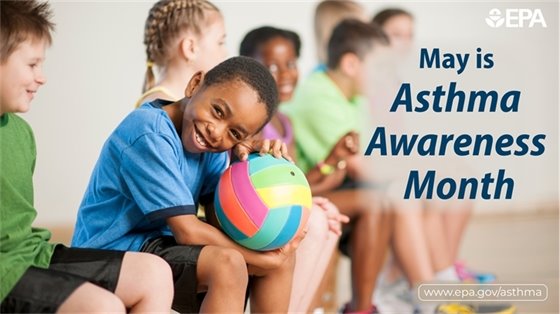
May is Asthma Awareness Month

May is Asthma Awareness Month. Asthma is a serious, sometimes life-threatening chronic respiratory disease that affects quality of life for about 5 million children. While no cure for asthma exists yet, child care providers can help protect children with asthma from the things that trigger symptoms by controlling the indoor environment. Learn ways to do this by clicking here.

Learn more about asthma by visiting the EPA website on asthma in communities and schools. 

INDIVIDUAL CARE PLANS

The Child Care Team at Public Health Seattle-King County has excellent individual care plans posted on their website, including a care plan for children with asthma. These include new checklists that walk child care and early learning programs through the many items needed to complete a care plan. You can find these plans here. Please feel free to contact our Child Care Health Outreach Public Health Nurse if you have any questions about individual care plans. 425-252-5415 or shd.childcarehealth@co.snohomish.wa.us. 

Child Care Health & Safety Classes Logo
instructions for learning portal
LMS
learning portal

We appreciate your patience as we continue to update our courses to enhance your learning experience. Classes are being offered AT NO COST at this time. 

 For questions about our online classes, contact our team at SHD.ChildCareHealth@co.snohomish.wa.us or via phone at 425.252.5415.

This Month's Featured Classes

Stress

NEW! Stress Management for Child Care Providers 

This class identifies stressors child care providers experience and suggests ways to manage these stressors. In this course, you will learn about the impacts of personal stress, job stress, burnout, and secondary trauma and how to combat these stressors with coping skills and self-care practices.

Register Here

Child chipping paint off a window frame

Childhood Lead Poisoning Prevention


Lead remains a problem in Washington State and Snohomish County. This course is designed to educate child care providers and staff on how to keep children and families safe from the harmful effects of lead. Did you know there is no safe level of lead? In this course you will learn where lead was historically used, where it is currently still found and simple steps you can take to protect children and families from the effects of lead poisoning.


Register Here

Girl brushing her teeth

Tiny Bites: Oral Health in the Child Care Setting


The most common chronic disease in children is tooth decay. This is especially true in underserved populations. This course will focus on the importance of dental health in children, pediatric oral health recommendations, and how to be an oral health advocate in the child care setting. Information and guidance is provided on nutrition, oral health practices, alternative oral health activities, and methods for toothbrushing in child care. 


Register Here

Contact Information

Snohomish County Health Department
3020 Rucker Ave., Ste. 202, Everett, WA  98201

                                                                                     
Email: SHD.ChildCareHealth@co.snohomish.wa.us

Program Phone:  425.252.5415

Website:  http://www.snohd.org/238/Child-Care-Providers

Received this as a forward? Sign up for our newsletter by clicking here.

The Child Care Health Outreach Program staff are available to consult with you on these and other health, safety, and nutrition topics by phone, by email, or at your child care facility. 

Share on Facebook
Share on Twitter
Share via Email

Snohomish County Health Department
3020 Rucker Ave., Everett, Washington

Powered by
CivicSend - A product of CivicPlus